






 분야
분야 pptx
pptx2.State vs private
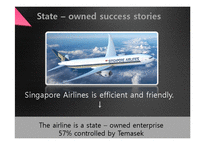
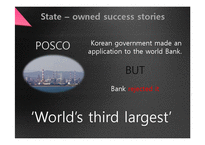
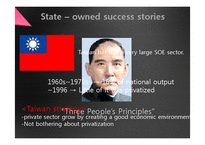
3.State-owned success stories
4.The case for state ownership
5.The pitfalls of privatization
☞ The key goal of the communist movement
The abolition of private ownership of the ‘means of production’ such as factories and machines.
☞ Why?
They believed that it was the reason for the ‘wasteful’ anarchy of the market.
However…..
The planned economy based on state ownership of enterprises performed very poorly.
☞ State ownership in the dock
Why do the Bad Samaritans think state-owned enterprises need to be privatized?
↓
People do not fully take care of things that are not theirs
Ownership gives the owner two important rights to its property.
☞ Dispose of it.
☞ Claim the profits from its use.
Problems
‘principal-agent problem’
‘free-ride’
‘soft budget constraint’
☞ ‘principal-agent problem’
Even if there are some firms which are managed by their majority owners but most of them are managed by hired managers because they have dispersed share ownership.
☞ ‘free-ride’
Because of that, individual shareholders will not have enough incentive to monitor the hired managers like state-owned enterprises.
☞ ‘soft budget constraint’
Private firms can also expect subsidies or even government bail-outs.
When we are out to make a buck and
believe in the state when we are about
to lose a buck.
From foreign banker